
Unsung Heros
- 5 Senses CulinaryTours

- Sep 13, 2025
- 6 min read
Updated: Nov 28, 2025

On the Connemara coast you get to know the Wild Atlantic Way slogan intimately. It’s blustery winds, marine mists and plenty of pelting rains makes it all glimmer in multi shades of green. I fell in love with this rugged coastline many years ago, it is a place to slow down find hidden coves and beaches, fields dotted with sheep, white cottages nestled in the hills, and mountains that rise up, like the towering Twelve Bens. For me, it is authentic Ireland.
I am just back from a re-visit from Westport to the Aran Islands in the haunted territory of Irish Chieftain Grace O’Malley. Trail blazer, political heroin, sea captain or pirate queen, I think Grace O’Malley was definitely all of the above. At sunrise I walked down to Clew Bay to see the sun bath Westport House in a flood of golden color. Her statue stands outside the historical house just as a reminder of her legacy, this is one of her many Connemara spots.
From Achill Island to Galway she reigned not unlike Elizabeth I for 63 years. She sailed the world as a merchant and perhaps trickier as a privateer. And both, died in 1603. But unlike the “Virgin Queen,” Grace was married three times and had four children, but none rose to her exalted status in Ireland. Yet her youngest son, Tibbot became the 1st Viscount of Mayo and was a member of the House of Commons. Her first marriage was arranged with another major clan, the O’Flaherty’s of Galway. That name will come up again in history. The strange thing is there were no historical notes of this Pirate Queen in Ireland except handed down tales, yet she was an Unsung Hero for Ireland. But there was actual archives in England to document this powerful woman’s endeavor for her people. Her bold meeting with Queen Elizabeth at Hampton Court was not only documented but drawings were made of the two meeting face-to-face.
As I hiked and sailed around this coastline I saw many of the castles or fortresses built by Chieftains, the British and Grace O’Malley herself, but it occurred to me I didn’t see any remnant bunkers of World War II. It is because Ireland officially declared neutrality, calling the period "The Emergency," but its policy was complex and favored the Allies. Ireland secretly shared intelligence, allowing Allied aviators to escape, and provided crucial weather data for D-Day, while German aviators were interned. Tens of thousands of Irish citizens also volunteered to fight for the British and Allied forces. But lingering bitterness from British rule and the Irish War of Independence made siding with Britain unpopular at the time.
I was shocked to learn they didn’t get a hero’s welcome home. Instead, they came back to a country that was scornful of, ignorant of, and indifferent to what they had been through. In many cases, they faced open hostility. Their service in the British forces was seen by many at home as anti-national, almost traitorous. But they had played their part in defeating Hitler. Though they got no thanks for it when they came home. It shows how uninformed and inward-looking some of Ireland was at the time. Again, in my opinion, Unsung Heros.
Another Irish man has come to my attention, Monsignor Hugh O’Flaherty. As a young man he grew up in Killarney where his father was the steward of the Killarney Golf Club, inspiring his love and talent for golf, which lasted a lifetime. But he also had a calling for the priesthood. As a seminarian, he was posted to Rome in 1922 the same year that Mussolini came into power. He was ordained in 1925 earning doctorates in divinity, canon law and philosophy. O'Flaherty became Italy's amateur golfing champion and as a devoted golfer he played regularly with highly placed individuals like Mussolini’s son-in-law, ex-king Alfonso of Spain and other aristocrats in Rome’s social circles. He was popular, charming and cleaver priest. He became a skilled diplomat perhaps through his Irish upbringing and plenty of time on the golf course. He served the Vatican in many far-flung places: Egypt, Haiti, Santo Domingo and Czechoslovakia, before being re-called to Rome for working directly in the Holy See.
In the autumn of 1942, the Germans and Italian authorities began a crack- down on Roman Jews, Aristocrats and anyone with political tendencies; having socialized with all these people before the war the Monsignor showed compassion by organizing safe places to harbor these people. In the spring of 1943, Rome became a terrifying place. O’Flaherty broadened this operation to hide escaped Allied prisoners of war and airmen that had been shot-down. He developed a network of safe houses like convents, monasteries and apartments in Rome. All of this was going on under the nose of Pope Pius XII.
Critics argue that Pius XII did not make a strong enough public denunciation of the Holocaust to pressure the Nazis and prevent the deaths of millions. Some believe his actions were motivated by a desire to protect the Church's interests in a Europe under Nazi control. His reluctance to openly condemn Hitler is seen by some as a moral failing and an indication of weakness. While his public silence remains controversial, recent archival research emphasizes his role in providing extensive, albeit often covert, humanitarian aid to those persecuted by the Nazis, making a clear judgment on his actions challenging. And nearing the end of the war Pope Pius XII opened up the grounds of Castel Gandolfo to refugees escaping the fighting taking place around Rome. On January 22, 1944 the first of what became 12,000 people began arriving on the property. As some say, “walk in another man’s shoes.”
During the ten months that the Nazi’s occupied Rome, Monsignor O’Flaherty was banned from leaving the Papal City as he would be arrested, if not shot. The Gestapo Colonel, Herbert Kappler wanted his capture because he was suspected of heading this Roman escape line that he and his team were running right under the Nazi’s noses. The Monsignor was one of the most wanted men in Rome, plus he one of the most courageous. O’Flaherty would constantly dress in disguises from a street cleaner, postmen, to a nun and even in a German SS uniform to continue his tireless rescue missions. The six foot two spirited 45-year-old Irish cleric outwitted evil at every turn.
An example of his deeds was a Jewish father approached Mgr. O'Flaherty at his usual post proceeded to unwind a gold chain that went twice around his waist. “My wife and I expect to be arrested at any moment,” said the Jew. “We have no way of escaping. When we are taken to Germany we shall die. But we have a small son; he is only seven and is too young to die. Please take this chain and take the boy for us too. Each link of the chain will keep him alive for a month. Will you save him?” The Monsignor improved upon this plan: he accepted the chain, hid the boy and procured false papers for the parents. At the end of the war, he returned the boy and the chain.
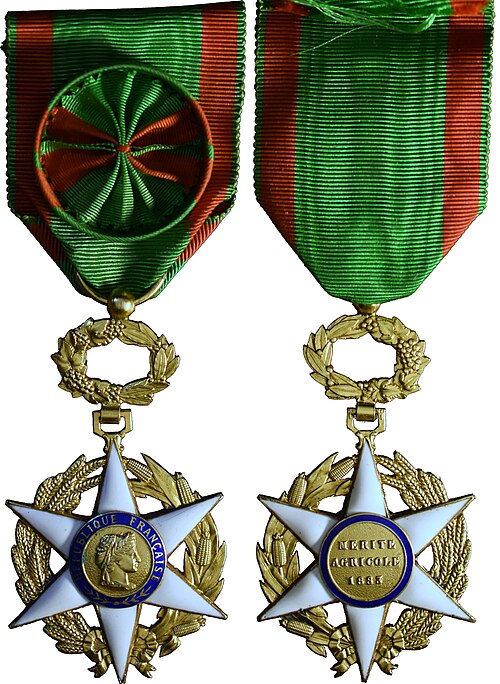
By the end of the war he had helped over 6,500 Jews, American and British Soldiers escape from the Germans, and his activities earned him the nickname “Scarlet Pimpernel of the Vatican” as he became the master of disguises and evading capture from the Germans. He was revered as a Catholic hero. He was at the time awarded many decorations, one that also included the US Medal of Freedom. Though the Irish did not recognize his tremendous deeds until 2013 where a fitting tribute to him was unveiled in Killarney, the town he grew up in.
But there is another twist to Hugh O’Flaherty that rocked me and drove home the fact he was a very special man of God. Herbert Kappler, his nemesis was personally responsible for cruel deeds. O’Flaherty knew of five of his crew members, two of whom were priests, were tortured and killed. The massacre at The Ardeatine Caves, which were personally supervised by Kappler, as a reprisal for the bombing attack by partisans on 32 SS Nazi soldiers. Berlin directed him to have 10 times as many Italians shot in retaliation, thus he ordered the execution of 335 hostages rounded up and shot.
As Rome was about to be liberated by the Allies, Kappler went to the Monsignor to ask him to help his wife and two small children escape. Where he was able to find it in his heart and soul, Kappler’s wife and children were smuggled to Switzerland thanks to O’Flaherty.
At Herbert Kappler’s trial in 1948, after six hours, the head of the five-judge military tribunal gravely pronounced the stiffest sentence he could give under Italian law: "life imprisonment, including four years’ solitary confinement, for “repeated and premeditated murder.”
And the icing on the cake baffles me completely. During this time his only regular visitor was none other than the Monsignor himself, Hugh O’Flaherty, who visited him every month for 10 years as well as writing to him regularly and subsequently baptized him to the Catholic faith. Let that sink in. I have been so touched by this revelation, I have promised myself that I will visit his memorial in Rome and in Killarney the next time I have the opportunity.
This is a man who is an Unsung Hero of tremendous magnitude. Many in Ireland did not know of his deeds until a movie was made with Gregory Peck called The Scarlet and the Black. If you get a chance, you can find it on YouTube.


Comments