
American Road Trip

Updated: Aug 12
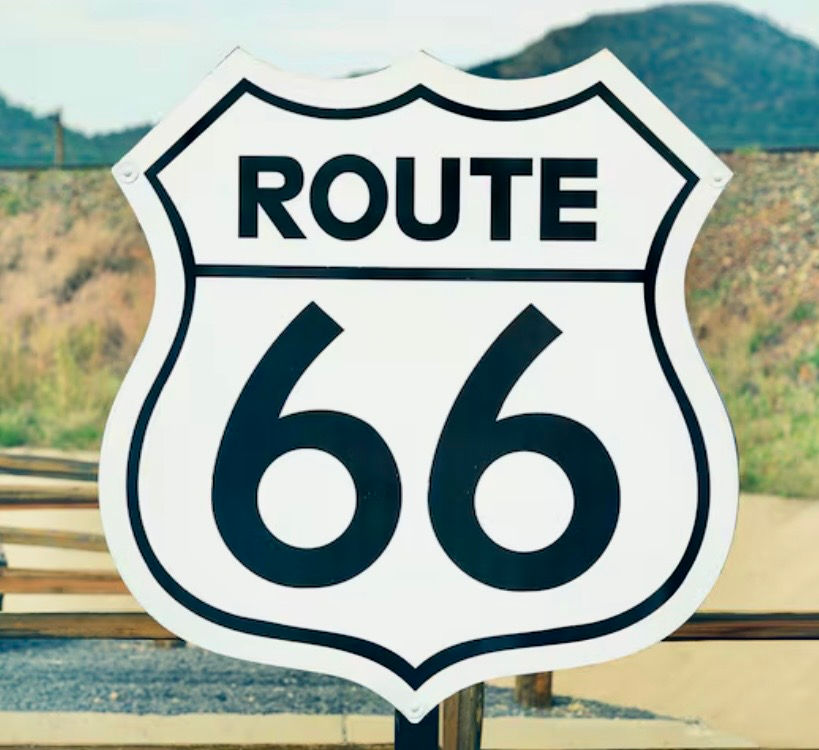
With summer upon us, many Americans talk about the “road trip” this is one of the iconic family holidays. Route 66 is on some people’s bucket list experiences. But, I also know of many Europeans that target their visit to the USA for a rental car and Route 66. Children in my era remember the station wagons pack with everything to head to the beach house, camping or heading out to visit relatives that have moved to various states.
Interestingly, it was someone famous to us who really made this happen. Actually, another man from Denison, Texas, Dwight D. Eisenhower. After graduating from West Point, he undertook an assignment in the Army’s first transcontinental motor convoy. In the summer of 1919, just a year after the end of WW1 the Army wanted to know how we as Americans could maneuver military troops and equipment throughout our borders.
It turned out to be a nightmare. It took 62 days to cover 3,251 miles at a snail’s pace of an average of 6 miles per hour. The answer was shockingly; there was no military mobility or endurance. Road conditions were passable along the East Coast but, the Midwest and West were largely unpaved roads and bridges were unable to handle military trucks. The troops were forced to re-build or re-enforce 88 bridges along the way. The terrain was so bad that there were constant mechanical breakdowns. Moving the Military for defense purposes was nearly impossible. His Transcontinental Motor Convey from Washington D.C. to San Francisco included 79 vehicles of all sizes and 297 personnel. The official report to the Pentagon highlighted the existing network of disjointed, unpaved roads and weak bridges spelling disaster if we were ever attacked.
The report laid dormant for years as there was reliance on the Transcontinental Railroad, which was the first continuous rail line connecting the eastern United States to the Pacific coast, completed and running since 1869.
Decades later when now General Eisenhower went to Europe after the outbreak of WWII he was made aware of the highly efficient German Autobahn, directly effecting the movement of all the German military and supplies. Now he was in charge to try and defeat Nazi Germany. As Allied armies raced across France and into Germany, he marveled at the vast highway system built by the Germans prior to the war. Eisenhower wrote in his presidential memoirs, “During World War II, I had seen the superlative system of German autobahn–[the] national highways crossing that country.”
Obviously, these countries had a head start and were definitely not as large as the US. But this advanced European highway system helped the Allies. Eisenhower was fully aware that the Allied commanders faced a huge task of not just moving 1.5 million troops, their equipment, ammunition, medical facilities, and food to feed them. Daunting to even imagine. Major General John CH Lee took command in 1942 and transformed the UK into a forward military supply depot. This West Point graduate managed the logistics for everything from fuel to medical supplies.
On D-Day alone they moved 185,000 troops and 20,000 vehicles from some 4,000 landing crafts. But once ashore an even larger struggle began, the epic campaign to keep this number of soldiers fueled with ammunition. Within days of landing, Allied forces needed 6,000 tons of supplies every day. That number doubled to over 12,000 tons just two weeks later and then went to 20,000 tons for the duration of the war.
No invasion in history can match the mind-boggling scale of D-Day. As many as 745 ships took part in the operation. But once the Allied forces were ashore and fighting their way across France, an even larger struggle began: the epic campaign to keep supplies, fuel and ammunition flowing to the front lines.
Sadly, history has largely forgotten one of the architects of that Herculean effort: Brigadier General John C.H. Lee. A textbook example of an eccentric genius, the 56-year-old army engineer designed and maintained the logistical machine that would keep America’s massive army in Europe fed and equipped from the Normandy hedgerows through to the final Allied drive into Germany.
Weeks later, he created the celebrated Red Ball Express to supply Patton’s fast-moving armored spearhead when it outran its own supply lines. Throughout the brutal summer and fall of 1944, Lee kept the Allied troops fed, their guns loaded and their tanks gassed up. In the Battle of the Bulge, December of 1944, Lee rushed stockpiles of gas an ammunition the Germans needed away from the enemy’s line of attack and blew up anything his troops couldn’t move. The German advance withered on the vine for lack of fuel and other supplies – thanks to Lee’s adroit handling of the crisis. Many German officers after the war speculated that it was the Red Ball Express logistics that actually won the war for the allies.
The Red Ball Express began on August 25, 1944, after a 38-hour planning meeting. And at its peak, it operated 5,958 trucks, moving approximately 12,500 tons of supplies daily over dedicated routes marked with red balls, which were closed to civilian traffic and given priority on roads. Convoys typically consisted of at least five trucks, escorted by jeeps, though individual trucks often departed as soon as they were loaded. The system ran 24/7 for 83 days.
The Red Ball Express was primarily staffed by African-American soldiers, who made up about three-quarters of the drivers. These men faced grueling conditions, including long hours, minimal sleep, and the challenges of driving over damaged roads and through mud, while also confronting systemic racism within the segregated U.S. Army. The Red Ball Express demonstrated the importance of logistical innovation in modern warfare. General Lee was an advocate for these men and faced backlash for it. Looking at this today the logistics are on par with Amazon or maybe that’s where the logistics genius started.
To Eisenhower these two formative military experiences—the failed 1919 road trip and the successes of the Autobahn—directly fueled his advocacy for a national, interconnected highway network, leading him to sign the Federal-Aid Highway Act of 1956 as President. Eisenhower’s military experience, including his participation in the transcontinental convoy and observations of Germany’s autobahn during World War II, highlighted the need for rapid troop and equipment movement in case of national emergencies. The Interstate System was designed to support defense logistics, allowing for efficient mobilization of military forces and evacuation routes in the event of war or disaster.
The Missouri Highway Commission awarded the first contract to begin building the interstate along the famous Route 66 in rural Laclede County, 160 miles southwest of St. Louis. However, construction on the first section of interstate actually began in St. Charles County, Missouri, on Aug. 13. Kansas and Pennsylvania have also made competing claims that their states were first to possess sections of interstate.
Ready for the American summer road trip? Remember to tip your hat as you turn on to Route 66 as it celebrates its 100-year Anniversary!


Comments