
This Man needs more than a medal
- 5 Senses CulinaryTours

- Jun 25
- 3 min read
Updated: Jun 26
For all the years of my wine tasting passion, in-depth studying in multiple countries and traveling to hundreds of vineyards firsthand; I found that you can truly learn something so important out of the blue that it strikes like a lightning bolt! Why did I not know that? Why had something so profound withered into obscurity. How is that possible?
Any wine enthusiast knows it was a tiny American microscopic, yellow, sap-sucking insect that was the cause of the European devastation of the vineyards in the mid 19 century. As the insect was feeding it injects toxic saliva, which causes galls and open wounds on roots, which allow secondary fungal and bacterial infections to develop, ultimately killing the vine within 3–5 years. European vines had no natural immunity which meant this little pest Phylloxera, kills!
The how and why?
Phylloxera was inadvertently introduced to Europe in the 1850s when botanists imported American grapevines for experimentation. The first signs of infestation appeared in southern France around 1863, and the pest rapidly spread across France, Spain, Italy, Portugal, Germany, and beyond. By the late 1800s, it had destroyed an estimated two-thirds to nine-tenths of European vineyards, causing wine production in France to plummet from 84.5 million hectolitres in 1875 to 23.4 million hectolitres in 1889 destroying many a winemaking family and throwing the entire agricultural revenue of France into turmoil.
In the 1850’s the steamships were starting the passage across the Atlantic cutting the travel time down to 2 weeks or less. And then the train lines got things across the countryside in hours not days. So, these aphids survived instead of dying on longer journeys. And it spread like wildfire, causing Disaster!
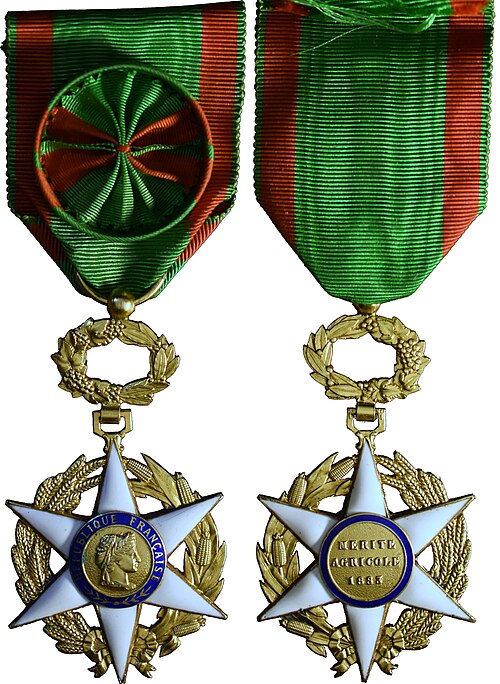
In comes Thomas Volnay Munson, a horticulturist living in Denison, Texas with a deep interest in species of grapes native to the United States and performed systematic work developing new varieties by cross-pollination and hybridization. Munson discovered that certain wild American grape species—notably Vitis berlandieri, cinerea, and cordifolia from central Texas—were naturally resistant to Phylloxera. So, he collaborated with French scientists to supply these resistant rootstocks, which allowed European vineyards to recover and continue producing wine. These rootstocks are still used worldwide. In 1888 the French government honored him with the medal of Chevalier du Merite Agricole, and Cognac, France, became a sister city to Munson's home of Denison, close to the Oklahoma border. The French Government traveled 13,000 miles to bestow this medal, traveling via steam ship, trains and even a stagecoach to thank and honor the man.
Munson’s work saved the European wine industry and secured the future of global viticulture. His research remains relevant today, and his cultivars are still used worldwide. Munson’s expertise spanned botany, viticulture, and horticulture. He wrote Native Trees of the Southwest under the direction of the United States Department of Agriculture. He also wrote in his 1909 book, Foundations of American Grape Culture. In 2025, he was inducted into the American Society for Horticultural Science Hall of Fame, cementing his status as one of the most influential horticulturists in history. Sadly, his name isn't synonymous with wine and his renown has faded with time. It should be known in the scientific pantheon like; Marie Curie, Thomas Edison, Jonas Salk and Alexander Graham Bell for goodness' sake!
This to me is earth shattering, this man saved WINE. Basically, every glass we sip, should first be raised to T.V. Munson!
Today, The West Campus of Grayson County College preserves much of Munson's work. In 1974, the T.V. Munson Memorial Vineyard was established that preserves many of his cultivars and produces stock for propagation. Building on this remarkable legacy, Texas A&M University’s Department of Horticultural Sciences has launched the Munson Legacy Project, which is a multi-year research and education initiative designed to preserve, characterize, and celebrate Munson’s scientific contributions through the integration of modern genomics, data science, and student training. Bravo!
Thomas Volney Munson -September 26, 1843 – January 21, 1913.



Comments